Australian Muslims have decried anti-terror security measures as creating a climate of fear and apprehension among the Muslim minority in the country.
“We want to live in a country where I feel proud to be Australian, belong to this land, where I have rights like any other persons,” Ali Roude, the deputy chairman of the Islamic Council of New South Wales, told a parliamentary panel reviewing the measures on Monday, June 6.
“Not always targeted, not always seen as a possible threat to Australia’s security, which is the feeling at the moment,” he was quoted as saying by the Australian Broadcasting Corporation (ABC).
Roude complained that Australian Muslims feel targeted by the Australian Security Intelligence Organization (ASIO), which has been given powers to detain people on terror-related suspicion for up to seven days and question them for up to 48 hours without charges.
Other sweeping powers also allow the security agencies to hold Australians even if they are not suspected of criminal behaviors.
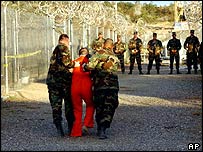 “What makes Amnesty’s gulag metaphor apt is that Guantánamo is merely one of a chain of shadowy detention camps that also includes Abu Ghraib in Iraq, the military prison at Bagram Air Base in Afghanistan and other, secret locations run by the intelligence agencies. Each has produced its own stories of abuse, torture and criminal homicide. These are not isolated incidents, but part of a tightly linked global detention system with no accountability in law. Prisoners have been transferred from camp to camp. So have commanding officers. And perhaps not coincidentally, so have specific methods of mistreatment.”
 University of Florida professor Sami al-Arian goes on trial today in what is being billed as the most important terrorism case in the United States since September 11.