
The Muslim presence in the racist mind

“In one of her last essays published in the United Kingdom, the late Susan Sontag compared the pictures of tortured Iraqi inmates at the Abu Ghraib prison in Iraq with the photographs ‘of black victims of lynching taken between the 1880s and 1930s, which show smalltown Americans, no doubt most of them church-going, respectable citizens, grinning, beneath the naked mutilated body of a black man or woman hanging behind them from a tree’. Sontag was amongst the few voices who opposed the collective transmutation of the transitory mood of anger after 11 September into hatred channeled primarily towards the Islamic worlds. She sensed the dangers of mobilising collective passions for political ends and the dichotomisation of the world into good and evil.

“It was that period, one remembers, that produced Anne Coulter’s demand that ‘[w]e should invade [Muslim] countries, kill their leaders and convert them to Christianity’ and suggestion that, since ‘[t]here’s nothing like horrendous physical pain to quell angry fanatics’, ‘a couple of well-aimed nuclear weapons’ can transform ‘Islamic fanatics’ into ‘gentle little lambs’. Coulter was not the only one infusing public discourse with tightly packaged hate messages: Fred Ikle, for instance, alluded to a nuclear war that ‘might end up displacing Mecca and Medina with two large radioactive craters’; John Cooksey suggested that any airline passenger wearing a ‘diaper on his head’ should be ‘pulled over’; and Jerry Falwell asserted on 60 Minutes that ‘Muhammad was a terrorist’ and that he was ‘a violent man, a man of war’, a statement for which he later apologised.  It was that period, in short, which made the Muslim Vogelfrei culturally and, to a certain extent, legally as well.”

Arshin Adib-Moghaddam in MRZine, 15 June 2006
French Islamic institute fights Islamophobia

France’s first Islamic government-backed institute will open in October in the northern city of Lille to counter the rising Islamophobia phenomenon and groom qualified imams and preachers.

“The need was so pressing to have such an institute to counter prevailing Islamophobia,” the institute’s dean Mohammad El-Beshari told IslamOnline.net.

“The institute, which is affiliated to the University of Lille, will project the tolerant image and openness of Islam,” added Beshari, also the deputy head of the French Council for Muslim Faith (CFCM).

He said the Muslim minority, estimated at some six millions, were in a dire need to have such an educational establishment.

The institute is co-financed by the French and Qatari governments and its premises are donated by Lille Municipality.

Islam Online, 15 June 2006

Forest Gate Two – victims? Nah, says Simon Heffer

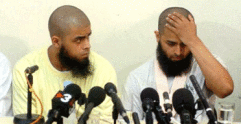
Forest Gate press conference“First he heard a scream. The next thing Mohammed Abdulkayar remembered was making eye contact in the darkness with the man who stood at the bottom of the stairs. At that instant, without warning and, he says, without provocation, the police officer fired a shot which tore through his chest and exited through his right shoulder. He slumped against the wall, bleeding and senseless….
“Visibly distressed, with his wound still bandaged and with his arm in a sling, Mr Abdulkayar gave his first full account of the events of June 2…. ‘I was begging the police “please, please, I can’t breathe”. He just kicked me in my face and kept on saying “shut the fuck up”. One of the officers slapped me over the face. I thought they were either going to start shooting me again or were going to shoot my brother. I still didn’t know that it was the police because they hadn’t said a word about police’.”

Hugh Muir reports on yesterday’s press conference by the two innocent men targeted in the Forest Gate police raid.

Guardian, 14 June 2006

For his part, Telegraph journalist Simon Heffer complains that “pacifists, anti-racists, radical Marxists, anarchists, anti-Blairists and others of varying degrees of conviction and opportunism” have “branded the two brothers in the Forest Gate raid ‘victims’ – a word used by the chairman of their press conference yesterday. It is a word that is clearly losing its force in our language. There seems to be a pursuit of moral equivalence with the more usual idea of a ‘victim’ of terror.”

Daily Telegraph, 14 June 2006

Islamophobia in Europe

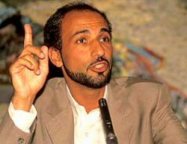
Tariq RamadanThe anti-Islam discourse in Europe is not only coming from politicians and international media but also from intellectuals, a conference on Islamophobia in Europe held in Brussels on Monday was told.
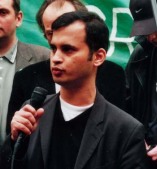
Jocelyne Cesari, an associate professor from Sorbonne, Paris, said Muslims in Europe are facing discrimination in the cultural and religious domain as well as in immigration, housing, education and employment “Muslims belong to the underclass of Europe,” she noted.

Well-known European Muslim thinker and intellectual Tariq Ramadan said “there is a discourse built on racism and Islamophobia.” “What we heard about the Jews in the 1930s-40s now is coming back to Muslims. Yesterday it was said by right-wing parties. Today it is the mainstream parties which are carrying out the anti-Islam propaganda,” he said.

Speakers in the conference cited the example of Italian writer Oriana Fallaci who, along with other insulting remarks, was quoted as saying Muslims “multiply like rats.” These western intellectuals are blaming Islam per se for all the problems of the Muslims, Ramadan said.

Ramadan, who is president of the Brussels-based European Muslim Network (EMN), also called for a debate among Muslims in Europe to respond to such criticisms and provide answers to Islamophobia.

The conference was organized by the European Policy Centre in cooperation with the King Baudouin Foundation as part of their “Multicultural Europe” program.

Islamic Republic News Agency, 13 June 2006

‘The latest hand-wringing on multiculturalism and its first cousin, immigration, in reality is a debate about Muslims’

Muslim-bashing dilutes our democratic values

By Haroon Siddiqui

Toronto Star, 11 June 2006

Bigotry increases in times of trouble, as we have seen in our own age.

An anti-French backlash was palpable in English Canada when bilingualism was introduced in 1969 and a year later we had the FLQ crisis. I felt it in the Prairies when the paper I worked for, The Brandon Sun, had the foresight and courage to support the Official Languages Act and oppose the War Measures Act.

The recession of the early 1990s stoked anger at multiculturalism and helped spawn the anti-immigrant Reform party.

The 1990 Oka crisis, the 1999 Mi’kmaq fisheries dispute in Nova Scotia and the Nisga’a land deal in British Columbia led to charges that “race-based rights” for First Nations would undermine common Canadian values.

On all those occasions, as also during the recent standoff in Caledonia, pessimists said racism lurks just below the surface and can bubble up any time. Congenital optimists like myself dismiss such episodes as aberrations, confident that the Canadian social equilibrium will always reassert itself.

The post-9/11 period, even while helping Canada become more Canadian, is slowly Americanizing our public discourse. It has fanned an anti-Islamism that resembles the old anti-Catholicism and anti-Semitism.

The arrest of 17 Muslims on terrorism charges has made matters worse, and also rekindled the debate on multiculturalism: Are we being too tolerant of different cultures? Do we instill enough “Canadian values?” Should we make newcomers sign a code of ethics?

Continue reading

How racism has invaded Canada

“This has been a good week to be in Canada – or an awful week, depending on your point of view – to understand just how irretrievably biased and potentially racist the Canadian press has become. For, after the arrest of 17 Canadian Muslims on “terrorism” charges, the Toronto Globe and Mail and, to a slightly lesser extent, the National Post, have indulged in an orgy of finger pointing that must reduce the chances of any fair trial and, at the same time, sow fear in the hearts of the country’s more than 700,000 Muslims. In fact, if I were a Canadian Muslim right now, I’d already be checking the airline timetables for a flight out of town. Or is that the purpose of this press campaign?”

Robert Fisk in The Independent, 10 June 2006

Questions after raid pair release

MuradQuestions are being asked about how the police and intelligence services handled an anti-terror raid in east London after the release of two men. Brothers Abul Koyair, 20, and Mohammed Abdul Kahar, 23, who was shot in the raid, were freed without charge.

Muslim Council of Britain chief Mohammed Abdul Bari said: “The question the community raises is the genuineness of the intelligence.” Mr Bari, who is secretary general of the Muslim council, told the BBC: “It all goes back to intelligence, and the police gave the reason for this massive raid. It all depends on how the police act now. There is an issue of trust.”

Met Police Authority member Murad Qureshi, speaking on BBC Radio 4’s Today programme, said: “I think that there were a series of mistakes, which I think that the Met should learn from, and they cover everything from the collecting of intelligence and how you corroborate that to the nature of the surveillance of suspects, through to how the suspects are actually dealt with.” Of particular concern, he said was “how we find ourselves with one of the brothers shot and quite a lot of the slander, quite honestly, which has been out in the press”.

BBC News, 10 June 2006

Canadian ‘terror’ suspects: innocent unless proven guilty

“What have been reported in the press are alleged acts and not proven facts. Only a trial by the public courts system – and not the media – can determine the difference…. Canadians should bear in mind that this recent wave of ‘anti-terror’ arrests is not the first. Two years ago, as many as 26 Muslim men were arrested in Toronto in a sweep called ‘Project Thread’ that received widespread international attention and that, according to at least one government official, had uncovered ‘an Al-Qaeda sleeper cell’ in Canada. This statement was proved to be false.”

Rabble news, 8 June 2006