 Brown plans to double terror detention limit
By Louise Nousratpour
Morning Star, 26 July 2007
Prime Minister Gordon Brown expressed a strong desire to double the current 28-day period of detention without charge or trial for “terror suspects” on Wednesday. But human rights campaigners slammed the proposal, warning that such an “assault on human rights and freedoms” would amount to internment.
During a speech on the “war against terror,” Mr Brown told MPs that the government would put forward a package of measures designed to combat terrorism. These include proposals to extend the pre-charge detention period to 56 days, allowing intercept evidence to be used in court, giving police powers to question suspects after they have been charged and placing a “highly visible” uniformed force at all ports and airports. The phone tapping and post-charge questioning proposals were first tabled by civil rights group Liberty.
Left MP John McDonnell vowed to monitor the proposals “very closely” once they are put to Parliament. He branded the plans “an unacceptable breach of human rights based upon unproved assumptions which will result in human suffering and miscarriages of justice.”
Stop the War Coalition convener Lindsey German urged MPs to defeat Mr Brown’s draconian proposals, just as they saw off his predecessor Tony Blair’s “disgraceful” plans to introduce a 90-day limit.
“These measures have nothing to do with stopping terrorism and everything to do with creating a climate of fear, where police and the government are given unprecedented powers,” she argued. “This is a complete betrayal of every aspect of our civil liberties and the millions of Labour supporters, many of who thought they would get better from Gordon Brown.”
Ms German warned that the proposals aimed to “criminalise communities – young Muslim men in particular.” She insisted: “The terror attacks in recent years, which many believe are the result of Britain’s foreign policy, will only stop once we pull out of Iraq and Afghanistan.”
Nicola Duckworth of Amnesty International UK said that the government had forgotten “the lessons of Northern Ireland in the ’70s, where internment had devastating consequences for those affected and a disastrous impact on human rights, the rule of law and society as a whole.”
Continue reading →

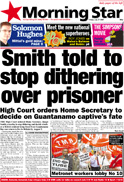 Smith told to stop dithering over prisoner
 MI5 contributed to the seizure of two British residents by the CIA, which secretly flew them to Guantánamo Bay in a move with “serious implications for the intelligence relationship” between Britain and the US, a cross-party committee of senior MPs said in a damning report released yesterday.