Yesterday’s vote in the Dutch parliament to ban the no-stun slaughter of livestock could halt production of kosher and halal meat in the Netherlands, and is likely to inspire similar campaigns in other European countries.
The argument seems straightforward: if we have scientifically proven standards for animal welfare that we believe in, we should stick to those standards. And indeed, it would be a simple argument if the people affected by the ban were a random mix of a wide variety of the population.
The problem with the outright ban is that the only people affected are religious minorities: in the Dutch case, one million Dutch Muslims and 40,000 Jews. This makes it easy to claim that anti-minority sentiments are the hidden reason for the legislation. When far right anti-Islamic parties like Geert Wilders’ Freedom Party strongly support the ban, it’s easy to believe that the motivation may not always be just to protect animal welfare.
Our society is becoming increasingly secular, with the mainstream regarding religious faith as unproven and therefore unsupportable: the atheistic viewpoint dominates. How far do we want this to continue? Do we want to live in a state where people are jailed for their religious beliefs?
Qualified vet Pete Wedderburn writes in the Daily Telegraph, 29 June 2011
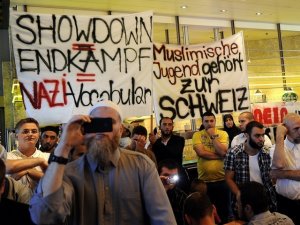 The Swiss news agency ATS
  A Virginia woman accused Air France of getting her terminated from the job she held briefly at Dulles International Airport because of her religion. “The hijab, to me, it’s empowerment,” 19-year-old Riham Osman said. “When people, men and women, talk to me, they’re looking at my personality, they’re listening to what I’m saying, they know that I stand for something.”
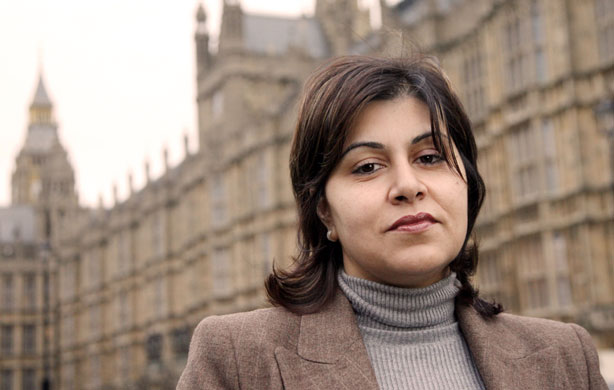 Sayeeda Warsi rolls back in her chair and bursts out laughing. “I don’t read her, actually. I call her Mad Mel,” Lady Warsi says of Daily Mail columnist Melanie Phillips, who has denounced her as “stupid”.
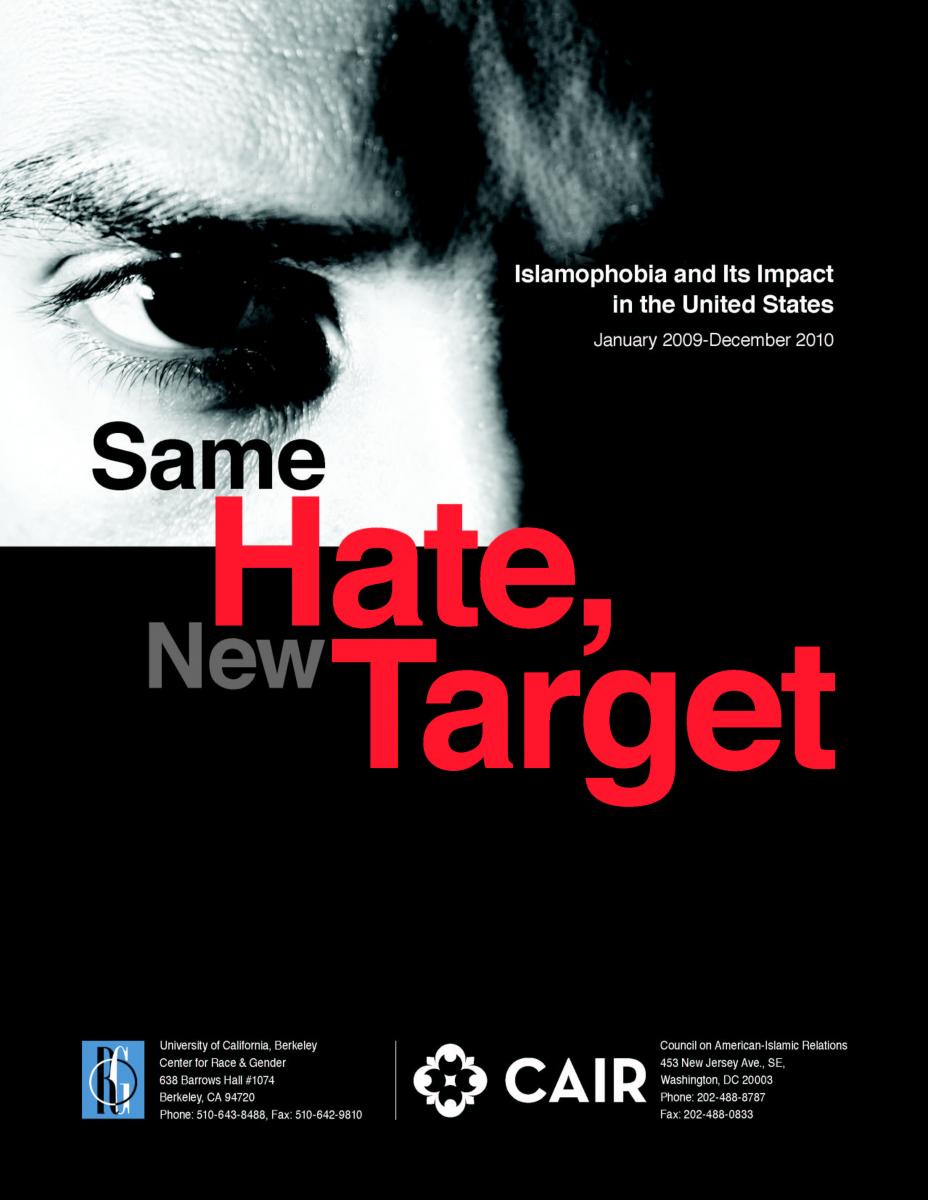 The Council on American-Islamic Relations (CAIR) and the University of California, Berkeley’s Center for Race and Gender today released a report based on available data and interviews with experts that documents growing Islamophobia in the United States and offers recommendations about how to challenge the troubling phenomenon.