
The Pentagon on Monday rejected a call to close the Guantanamo prison for foreign terrorism suspects and declined to express regret over five cases of U.S. jailers “mishandling” the Koran there.
US guards or interrogators kicked the Islamic holy book at the naval base at Guantanamo Bay in Cuba, stepped on it and soaked it in water, and in one case a guard’s urine splashed through an air vent onto a prisoner and his Koran, US Southern Command said.
Bryan Whitman, a senior Pentagon spokesman, said the United States was not considering shutting the Guantanamo jail, as suggested by a senior Senate Democrat. “Guantanamo serves a vital purpose in many ways.” Mr Whitman said. He said some prisoners are “very, very, very dangerous people”.
“They want to do harm not only to Americans but to US interests overseas, to our friends and allies and these are people that if released would certainly be found back on the battlefield in the war on terror.”
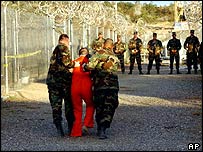 “What makes Amnesty’s gulag metaphor apt is that Guantánamo is merely one of a chain of shadowy detention camps that also includes Abu Ghraib in Iraq, the military prison at Bagram Air Base in Afghanistan and other, secret locations run by the intelligence agencies. Each has produced its own stories of abuse, torture and criminal homicide. These are not isolated incidents, but part of a tightly linked global detention system with no accountability in law. Prisoners have been transferred from camp to camp. So have commanding officers. And perhaps not coincidentally, so have specific methods of mistreatment.”
 University of Florida professor Sami al-Arian goes on trial today in what is being billed as the most important terrorism case in the United States since September 11.
 Governor of Florida Jeb Bush was among those who sent greetings to the annual banquet of the Florida Chapter of the Council on American-Islamic Relations.
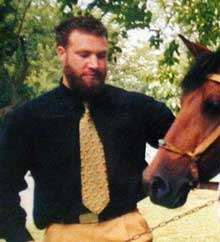 Richard Bernstein examines the case of Guantánamo detainee Murat Kurnaz, a 19-year-old Muslim from Germany, who was arrested in Pakistan in 2001 and handed over to US forces to face imprisonment and torture.
 The speech by Amnesty general secretary Irene Khan describing Guantánamo as the “gulag of our times” (see
  Reuters reports: “The Arab TV channel Al Jazeera rejected on Saturday as unfounded Defense Secretary Donald Rumsfeld’s accusations that it was encouraging Islamic militant groups by airing beheadings of foreign hostages in Iraq. ‘Al Jazeera … has never at any time transmitted pictures of killings or beheadings and … any talk about this is absolutely unfounded,’ the television said in a statement.”