FA rules Religious Observance to extend to all faiths

The English Football Association (FA) congratulated itself this month for finally accepting that its rule on Religious Observance in amateur leagues should be extended to religions other than Christianity.

For the first time, the FA acknowledged that just as amateur Christian players are not obliged to play on Good Friday or Christmas day, their Muslim counterparts should be afforded the same rights without fear of reprimand. The success was effectively due to The Muslim News campaign to correct this blatant discrepancy.

Embarrassingly, it took the case of Abram Moss Warriors and the highlighting of the rationale by The Muslim News for the FA to concede that its diversity policy was alarmingly outdated, having failed to take into account England’s growing Muslim population.

In 2003, the Manchester-based team, made up of mostly 12-year-old Muslims, were penalised with a £250 fine and excluded from their local cup for merely requesting the rescheduling of the kick-off time for a game during Ramadan that year. The Warriors’ appeal to Lancashire FA was rejected and met with patronising advice on the appropriate age for fasting.

Muslim News, 24 June 2005

Opposition to anti-incitement bill defeated

So the predicted backbench rebellion failed to materialise, and yesterday the new bill outlawing incitement to religious hatred passed its second reading in the Commons by 303 votes to 247. Interesting that the Lib Dems found themselves in a bloc with the Tories in opposing the bill.

It’s not every day that this member of the Islamophobia Watch collective applauds the politics of Gerald Kaufman MP, but I can’t help approving of the attack he launched on the Tories in the course of the debate:

“The problem with interventions by Conservative Members is they are totally unrepresentative of the population as a whole in that hardly any of them are open to the kind of humiliation that many members of our communities are open to. If they were, they would not be criticising this legislation.”

He went on to refer to “the case of Mrs Shahzada, a constituent of mine who went to a shop in central Manchester soon after 9/11. She wears a veil over her face, and the shopkeeper refused to serve her because she was, to his perception, a Muslim. That was hatred against an individual, not a criticism of Islam. It is about time that we had an Opposition who understood the kind of country that we live in today.”

Hansard, 21 June 2005

Continue reading

We need this law to fight hatred

We need this law to fight hatred

By Sadiq Khan, MP for Tooting

Evening Standard, 21 June 2005

It is, if its critics are to believed, a grievous threat both to our freedom of speech and to the nation’s cherished sense of humour. As such, the Racial and Religious Hatred Bill, which has its second reading in Parliament today, has been derided as dangerous, politically cynical, and most of all, as unnecessary. So why do so few of my fellow Muslims see it that way?

Debating the Bill, Muslims tend to think not of vicar jokes but of incidents like one in a charity shop in Shepherd’s Bush recently, where a white, British Muslim woman was told by another customer: “You may be English, but you married a f***ing Muslim.”

We think not about alleged political calculations, but about the dangers faced, for example, by one woman recently attacked in the street in north-west London while wearing Muslim dress. She was warned sympathetically by the nurse who treated her injuries: “You have to take off this scarf. Every month we get several cases like you who come for treatment.”

Indeed Muslims might tend to question the extent of freedom of speech when simply going out dressed recognisably as a Muslim can invite assault. Many reported cases involve Muslim women having their headscarves forcibly pulled off and or having alcohol thrown at them. In one incident, a schoolgirl had her headscarf pulled off by a parent of another child at the school gates, to the sound of laughter from those watching.

All these incidents happened because these Londoners were Muslims. It was not about the colour of their skin but the religion they follow.

The Racial and Religious Hatred Bill is not about gagging comedians or curbing criticism of any religion. It is about giving Muslims and other followers of religions the same protection from hate crimes as, for example, black people.

Continue reading

Jihadists strike at Newton Flotman

For Islamic terrorists intent on the destruction of western civilisation, there is no escape from the all-seeing eye of Jihad Watch.

Continuing his relentless pursuit of jihadists, even to the depths of rural East Anglia, our friend Robert Spencer has picked up on a news item from the EDP24 website (“the site where Norfolk really matters”). It reports that a “saboteur cut train signalling and fibre optic cables at two points near Newton Flotman, south of Norwich, and went to great efforts to throw investigators off the scent”.

Who could have done such a thing? Robert leaps to the obvious conclusion – it’s likely the work of Al Muhajiroun!

Jihad Watch, 20 June 2005

The fact that Al Muhajiroun dissolved itself over a year ago and no longer exists is of course a minor quibble.

‘We’ oppose an anti-incitement law, says Will Hutton

willhutton“Being a Muslim, especially a Muslim woman, in Britain is for many a dispiriting and occasionally terrifying experience. The society that prides itself on tolerance has lost its bearings over Islam. On the streets, the prejudice that Islam is irrationally and murderously violent and menacingly foreign has spawned a subculture of hatred and abuse. If you are a woman in a hijab, being jeered at, even spat at, is routine. Many never venture from their houses.

“This is fertile ground for widespread racism and where the law is currently uncertain. Harassment and abuse are certainly illegal, but the threshold that incurs legal action is very high; equally illegal is the expression of hatred, or views that might incite hatred, towards a group or individual for their race.

“But the woman in a hijab could be African, Asian or Middle Eastern. It is not her race that makes her the object of hatred; it is her religious belief and culture that require her to dress in such a conspicuously different way and make her part of the hated group. The law, as currently framed, offers her no systematic protection, and no explicit penalty for a political party, say the BNP, that chooses to make such hatred a central plank of its electoral pitch.”

Thus Will Hutton in the Observer, 19 June 2005

Continue reading

Atheists should welcome a law against religious hatred

Dobbo“Do you believe that anyone should be allowed to incite hatred against other people on the grounds of their religious belief? I don’t, even though I have no religious belief myself. That’s because I believe that nobody should suffer assaults, or live in fear, because of their religious beliefs. But they do. Today. In our country.
“Mothers collecting children from school have been abused and assaulted. So have men attending their places of worship. Homes have been stoned and fire-bombed. Recently it has been Muslim mothers, Muslim men, Muslim homes. Yet at present our laws offer no special protection to Muslims against incitement to these acts, even though it provides such protection to Jews and Sikhs and some Christians.”

Frank Dobson MP in the Guardian, 18 June 2005

Babar Ahmad – an unsuitable case for extradition

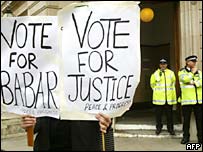
Vote BabarAn unsuitable case for extradition

The argument that Babar Ahmad is a terrorist who should be handed over to the United States is highly suspect. Solomon Hughes reports.

Tribune, 17 June 2005

Home Secretary Charles Clarke must now decide whether to extradite British computer worker Babar Ahmad to the United States by July 15. Connecticut’s district attorney says Ahmad used a website to raise money for Chechen terrorists and the Taliban. On May 17, Judge Timothy Workman ruled the extradition was in order, passing it to Clarke for a decision. However, in his judgement, Workman said: “This is a difficult and troubling case. The defendant is a British subject who is alleged to have committed offences which, if the evidence were available, could have been prosecuted in this country.”

But while Ahmad has been arrested and investigated by British police, he has never been prosecuted in Britain. The Americans claim jurisdiction only because the “Azzam.Com” website in question had a US Internet service provider. Otherwise, all the offences they allege took place in Tooting.

Judge Workman added: “I have no doubt that the many and complex issues that have arisen in this case will need to be explored by the High Court which can review the decision.

The judge emphasised that he did not consider the evidence against Ahmad, who faces extradition under extradition laws introduced by David Blunkett after September 11. As Judge Workman made clear, under Blunkett’s law: “The need for the United States Government to provide prima facie evidence to support the charges has been removed.”

The judge also noted that Blunkett’s extradition law contains “no reciprocal benefit to this country”. While the law comes from a treaty between the US and Britain, the British cannot extradite US citizens in the same way, without evidence being tested in court. The extradition law is a one-way street because of what Judge Workman called “the failure to ratify the treaty by the United States.”

Under the law, the judge could not consider the evidence and instead looked carefully at American guarantees that they would not send Ahmad to Guantanamo Bay, put him before a “military commission”, “render” him to another country or apply the death penalty. The judge made clear that Guantanamo Bay or other options under US “Military Order Number One” were “inhuman and degrading”, but accepted guarantees from the American Embassy that this would not happen.

The US evidence, untested in the British courts, tries to show that Ahmad did more than run Islamist websites and actually funded terrorists. Yet, an American man, who is supposedly Ahmad’s co-conspirator according to the US case, was recently invited to dinner with President George Bush.

Continue reading

Ethnic minorities face climate of fear, says race watchdog

Ethnic minorities face a “climate of fear and suspicion”, with Muslims, asylum-seekers and refugees bearing the brunt of growing hostility to immigrants, an investigation into racial prejudice in Britain has concluded.

A Europe-wide human rights watchdog noted the high numbers of attacks on minorities and said that anti-Muslim discrimination had intensified in the four years since the 11 September attacks. It criticised “negative attitudes” among the police to blacks and Asians, the disproportionate number of non-white prisoners and the exploitation of “racist and xenophobic discourse” by the far right.

The European Commission against Racism and Intolerance (ECRI), set up by EU heads of state to investigate racism and xenophobia, denounced the use of “provocative, sensationalist and sometimes outright racist language” in the reporting of asylum and immigration.

Independent, 15 June 2005

Download the ECRI report here.

See also Islam Online, 15 June 2005

Terrorist sympathiser at Chatham House!

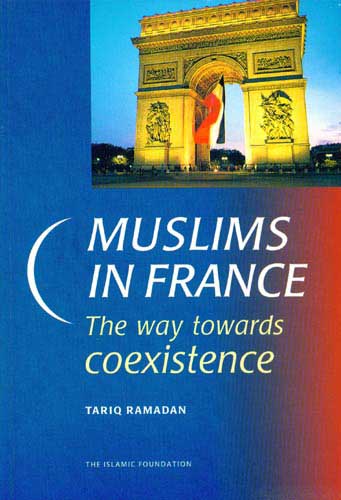
muslimsinfranceMad Mel denounces the Royal Institute of International Affairs for inviting Tariq Ramadan to address a Chatham House conference on “Is Islam a threat to the west?”

Haven’t they read Daniel Pipes’ informed and balanced account of Professor Ramadan’s career? You know, his meetings with Ayman al-Zawahiri, his financing of Islamist terrorist groups, his plot to destroy western civilisation?

Thank goodness there are commentators like Melanie Phillips who are alert to the danger such Islamist extremists pose to our national security.

Melanie Phillips’s Diary, 15 June 2005

‘Bin Laden’ libel case: Murdoch press settles out of court

Wealthy businessman Yousef Jameel settled a libel action today with the Sunday Times which published an article reporting he had links with Osama bin Laden. The Saudi Arabian, whose group of companies includes the major British car dealership, Hartwell plc, agreed to withdraw the libel case on undisclosed terms.

James Price QC, representing him at the High Court in London, told Mr Justice Gray that the article, published in June 2003, was headed “Car tycoon ‘linked’ to bin Laden”. Alongside the article were pictures of Mr Jameel, one of his car dealerships and the Twin Towers of the World Trade Centre in New York in flames.

It reported that Mr Jameel had been added as a defendant in litigation brought in the United States on behalf of victims of the September 11 terrorist attacks in the US.

Mr Price said: “Mr Jameel was concerned that readers of the article may have understood it to suggest that there were reasonable grounds to suspect that he had financially supported Osama bin Laden in connection with terrorism and that he helped fund the training of the terrorists who carried out the attacks.”

Muslim News, 15 June 2005