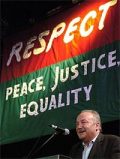
Galloway raises Islamophobia fear

Galloway RespectIslamophobia is a problem that must be addressed, MP George Galloway has told his Respect party’s annual conference in North London. Mr Galloway’s speech focused on the treatment of Muslims in Britain.
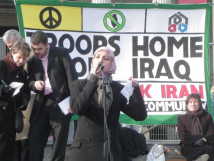
He singled out Jack Straw, who sparked a row when he revealed he asks Muslim women wearing veils to his surgery if they would consider removing them. Mr Galloway said Mr Straw had joined “the Dutch auction in New Labour of who can be most beastly to a minority”.

BBC news, 14 October 2006

Attacks on Muslims rise after veils row

Islamophobic attacks have surged in the past month in the wake of controversial remarks by ministers about British Muslims, say campaign groups.

The rise in verbal and physical assaults includes a spate of incidents in which Muslim women have been abused for wearing veils and scarves. They come in the week that the issue was raised by Jack Straw, the Leader of the Commons.

Muslim groups blame part of the rise in incidents, which also include assaults, firebombings and racist e-mails, on comments made by politicians and negative media reporting.

At least six Muslim women have been abused for wearing scarves or veils after Mr Straw said last week that he asks Muslim women who visit his constituency surgeries in Blackburn to remove their veil.

In one incident a Muslim woman aged in her 20s had her hijab or headscarf pulled off her head and thrown to the ground by a young white man while she was at Canning Town Tube station in east London. The attack happened on the same day that a Muslim woman had the veil torn from her face by a white man who uttered racial abuse as she waited at a bus-stop in Liverpool’s Toxteth district.

Both incidents occurred last Friday – the day after Mr Straw described the veil as, “a visible statement of separation”.

There were also reports that a young Muslim girl wearing a veil in Mr Straw’s Blackburn constituency was confronted by three youths last Friday night. One allegedly threw a newspaper at her and shouted: “Jack has told you to take off your veil.”

Three days later, a 21-year-old Turkish student told Muslim News that she was standing outside a supermarket in Canterbury, Kent, wearing a hijab when she was verbally abused by a middle-aged white woman. The older woman told her she hated her being in Britain and wanted her to leave.

On the same day in Hackney, east London, a black Muslim woman wearing a veil was getting off a bus when a passenger shouted out: “Why don’t you show your lovely hair?”

The sixth incident involved a Muslim woman wearing a hijab, who reported that when she got on to the London Underground two men standing next to her deliberately started discussing their support for a ban on veils.

Continue reading

Muslim teacher defends her veil

A Muslim support teacher suspended for wearing a veil in class says it was never a problem for her pupils. Headfield Church of England Junior School, in Dewsbury, West Yorkshire, said pupils found it hard to understand her during English language lessons. But Aishah Azmi, 24, said: “They never complained.” She added she was willing to take the veil off in class, but not in front of any male colleagues.

BBC News, 14 October 2006

‘What we need is sisterhood’ – Salma Yaqoob on feminist opponents of the veil

Salma addressing rally“Veiled Muslim women are caricatured as oppressed victims who need rescuing from their controlling men, while at the same time accused of being threatening creatures who really should stop intimidating the (overly tolerant) majority. What is distinctly lacking is any sense of genuine empathy for British Muslim women and how this ‘debate’ may be impacting on them….
“White feminists who feel they are doing their Muslim sisters a favour should think again. The Muslim community in general, and Muslim women in particular, are on the receiving end of some pretty ugly racism. I don’t ask you to like the choices we make. I simply ask that you respect our rights to make our own choices, and join with us to defend our rights to exercise choices that are freely made. Right now what Muslim women need from non-Muslim women is a little sisterhood.”

Salma Yaqoob at the Guardian’s Comment is Free, 13 October 2006

CRE head says Straw ‘completely right’ over veil

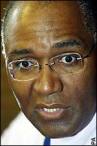
Trevor PhillipsBritain’s race watchdog has said Jack Straw was “completely right” to express his concerns about Muslim women wearing veils. Trevor Phillips, the chairman of the Commission for Racial Equality, also gave his full support to schools that ban girls from wearing veils in lessons.

With the row intensifying over Muslim dress, Mr Phillips told MPs he believed that Mr Straw, the Leader of the Commons, had taken a “perfectly reasonable” stance last week. “I think it’s right for him to say ‘would you mind not making me feel uncomfortable’ in this case, as long as it is clearly understood the answer to that can be ‘no’.” He added: “Jack Straw was completely right to raise this. It is not a question of public policy, but a question of social etiquette and manners.”

Mr Phillips also said he believed the wearing of veils for religious reasons should not override school-uniform policies, providing they have been “arrived at properly”. “If I were the headteacher in a school, I would probably say veils should not be worn in the classroom,” he told the Commons Education and Skills Committee.

Independent, 12 October 2006


Phillips, of course, was recently appointed by Ruth Kelly as chair of the new Commission for Equality and Human Rights, despite widespread opposition. As the Mayor of London commented at the time: “… what Trevor is doing is trying to move the race agenda away from a celebration of multi-culturalism and pandering to the Right, and I have to say it’s absolutely disgraceful.”

Government seeks to reinvent Islam

Government seeks to reinvent Islam

by Louise Nousratpour

Morning Star, 12 October 2006

MUSLIM organisations accused the government on Wednesday of using its financial muscle to “socially engineer” Islamic groups with no objections to Britain’s bloody foreign policy.

Their warning followed a speech by Community Secretary Ruth Kelly, who warned that there would be a “significant shift” in state funding and engagement in favour of organisations which spoke out clearly against extremism. Speaking to a Muslim audience in London, she said: “I do not come here to say that tackling extremists is your problem as Muslims alone. This is a shared problem.”

But Ms Kelly’s words were greeted with disdain by the Muslim community, which said that the minister was trying to hide the fact that the government has long blamed British Muslims for a rise in terror threats by talking of a “shared problem.”

Islamic Human Rights Commission chairman Massoud Shadjareh accused the government of “using its financial muscle to socially engineer a new brand of Islam which will be subservient to its foreign policy.”

Continue reading

Timothy Garton Ash tells Islamophobes to stop whingeing

“The most tiresome argument in this whole debate is that the niqab makes white, middle-class English people feel ‘uncomfortable’ or ‘threatened’. Well, I want to say, what a load of whingeing wusses. Threatened by drunken football hooligans or muggers – that I can understand. But threatened by a woman quietly going about her business in a veil? As for uncomfortable: myself, I feel uncomfortable with a certain kind of pink-faced Englishman wearing crimson braces, a white-cuffed pinstriped shirt and a bow tie. Their clothing is a fair predictor of the views that will come out of their mouths. But I don’t ask them to take off their braces.”

Timothy Garton Ash in the Guardian, 12 October 2006

Marginalising the MCB – ‘certainly a step in the right direction’ says Mad Mel

madmelMelanie Phillips welcomes Ruth Kelly’s speech implying that the Muslim Council of Britain is to be sidelined by the government:

“… a rethink has undoubtedly taken place within the government about its strategy for combating Islamic extremism in Britain. The refusal by the Muslim Council of Britain to attend the Holocaust Memorial Day commemoration ceremony shocked ministers rigid and opened their eyes to the MCB’s extremism (John Ware’s fine Panorama programme on BBC1 undoubtedly helped, too). Then the debacle over the farcical committees set up after 7/7 to advise the Prime Minister on how to tackle Islamic extremism – which the Home Office promptly stuffed with Islamic extremists – helped them realise the blindingly obvious fact that Muslim so-called representative institutions were virtually all radicalised….

“It’s welcome news that the government will henceforth be marginalising groups like the MCB. This is certainly a step in the right direction. From all that I hear and read, I think there’s undoubtedly a realisation by government that its strategy so far has failed. And indeed, it can hardly be unaware of the widespread public fury and anxiety about all this. But – as I set out in Londonistan – this strategy of appeasement goes far wider and deeper than kowtowing to extremist representative institutions. I’ll only believe something significant is happening when I see the removal of Islamist advisers from Whitehall and a ‘fundamental rebalancing’ of the brains of the Metropolitan Police.”

Melanie Phillips’s Diary, 11 October 2006

Abolish Muslim veils, says Harman

The strongest condemnation yet of the Muslim veil from a Government minister was made today by Harriet Harman.

She called for a campaign to abolish it because it kept women down and “hid” them from society. “How can you [live an equal life] if you can’t get a driving licence or a passport,” she said. “The veil is an obstacle to women’s participation, on equal terms, in society.”

The Constitutional Affairs Minister went further than Commons Leader Jack Straw who said the veil made him feel uncomfortable. She told the New Statesman: “If you want equality, you have to be in society, not hidden away from it.”

Ms Harman – who is bidding to become Labour’s deputy leader with a strong pitch for women’s votes – said she was dismayed to see “the young women whose mothers fought against the veil, and who now see their daughters taking it up as a symbol of commitment to their religion”. She said she wished the abolition debate was being led by Muslim women – but there were none in the Commons.

Ms Harman defended Mr Straw’s intervention but said it was “depressing” that some people had accused Mr Straw of speaking out for electoral gain.

Evening Standard, 12 October 2006