
Thousands more are stopped and searched after car bomb plot

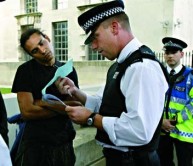
Stop and SearchPolice are stopping 366 people every day in London under stringent anti-terror powers described by the official security legislation watchdog as “a significant intrusion into personal liberties”.

The number of random checks carried out in the capital increased fivefold to almost 11,000 last month in the aftermath of attempted car bomb attacks, when the threat level was raised to severe.

Scotland Yard said yesterday that it was encouraging beat officers to use their stop-and-search powers more often and more widely to deter further terrorist attacks. Commander Rod Jarman predicted “an increase in overt counter-terrorism activities by the police over the coming months”.

Scotland Yard said that 54 per cent of those stopped last month were white, compared with a 71 per cent white population in Greater London. The proportion of people of Asian ethnicity stopped was 24 per cent – double the percentage in the capital’s population.

Inayat Bunglawala, assistant secretary-general of the Muslim Council of Britain, said: “It is perhaps unsurprising that we have seen this massive increase in the number of stop-and-searches carried out in the immediate aftermath of the attempted car bomb attacks in June. However, questions remain regarding the actual effectiveness of such a strategy based on disruption – given the very low number of charges brought as a result – and whether it is actually doing more harm than good.”

Gareth Crossman, of Liberty, said: “Thousands of Terrorism Act stop-and-searches have produced hardly a single terrorism arrest. When not targeted against specific threats, Section 44 undermines community relations and wastes police resources.”
Times, 7 August 2007

European mosque plans face protests

Petitions in London, protests in Cologne, a court case in Marseille and a violent clash in Berlin – Muslims in Europe are meeting resistance to plans for mosques that befit Islam’s status as the continent’s second religion.

Across Europe, Muslims who have long prayed in garages and old factories now face skepticism and concern for wanting to build stately mosques to give proud testimony to the faith and solidity of their Islamic communities.

Some critics reject them as signs of “Islamisation”. Others say minarets would scar their city’s skyline. Given the role some mosques have played as centers for terrorists, others see Muslim houses of worship as potential security threats.

“The increasingly visible presence of Muslims has prompted questions in all European societies,” Tariq Ramadan, one of Europe’s leading Muslim spokesmen, argued when far-right groups proposed this year to ban minarets in his native Switzerland.

The issue hit the headlines in Britain in late July when a petition against a “mega-mosque” next to the 2012 London Olympics site was posted on Prime Minister Gordon Brown’s Web site. It attracted more than 275,000 signatures before it was taken down.

In Germany last month, there were anti-mosque protests in Cologne and Berlin and a local council voted against one in Munich. A French far-right group vowed to sue the city of Marseille for a second time for helping build a “grand mosque”.

Bekir Alboga of the Turkish Islamic Union (DITIB) in Cologne said critics who see these new mosques as signs of separatism or of an Islamic colonization of Europe miss the point.

“The desire of Muslims to build a house of worship means they want to feel at home and live in harmony with their religion in a society they have accepted as theirs,” he said.

Continue reading

Osama strikes back

Osama Saeed (4)“At the Scotland United Against Terror rally I was heckled by someone in the crowd.

“Nothing new in that, happens quite a bit, par for the course. Caught a glimpse of the bloke near the front, just looked like the normal vagrant, possibly drunk, but definitely looking a complete state. He disappeared shortly after – possibly he’d been taken away by the police. He’d actually been pulled up by one of the other attendees to whom he retorted he was an academic and therefore was under the impression that he was above everyone else and allowed to act like a berk. Then he was pulled up by another academic who was on hand.

“I’ve just been told that the vagrant in question, was actually Tom Gallagher.”

Osama Saeed replies to articles by Gallagher in the Spectator and the Herald and to Brian Monteith’s piece in the Edinburgh Evening News.

See herehere and here.

European socialists decide to tackle Islamophobia

The Party of European Socialists (PES) – a caucus representing 214 members of the European Parliament (MEPs) drawn from 33 socialist and social democratic parties – has created a committee to seek ways to combat Islamophobia. Believing that Islam is now a European religion, the 25-member committee wants to “listen” to the 20 million Muslims now living in Europe in a bid to understand their problems, as well as provide solutions to alleviate their grievances.

PES says it resents the fact that the tone, nature and timing of the debate on Muslims in Europe have so far been set by ultranationalist and far-right parties. They also complain about the lack of serious answers given to parties that have flourished on enmity toward the Islamic religion.

Today’s Zaman, 2 August 2007

BBC Newsnight and File on 4 misled public in their allegations about Hizb ut-Tahrir

HizbIn a ruling published earlier this month, the BBC Editorial Complaints Unit (ECU), found that Newsnight and File on 4 had misled the public by broadcasting allegations in November 2006 concerning Hizb ut-Tahrir that were not based on evidence.

The ECU noted that both programmes alleged that Hizb ut-Tahrir, or a splinter group of its members, was responsible for planning a fire-bomb attack on a Croydon synagogue, based on information passed on by the shadowy organisation Vigil. The ECU ruled that this “was not a strong enough basis on which to mount such a serious allegation”.

In addition, Richard Watson, a reporter for Newsnight, misled listeners when he assured the Home Office Minister, Tony McNulty, that File on 4 had clear evidence that Hizb ut-Tahrir “seeks to propagandise on behalf of terrorists and glorify terrorism”. No such evidence existed and to this date the Home Office has not received any material from Newsnight, File on 4 or Richard Watson concerning Hizb ut-Tahrir. The ECU ruled that the programme did not cite sufficient evidence to justify these allegations.

Commenting on the ECU ruling, Dr Imran Waheed, media representative of Hizb ut-Tahrir, said, “In what has already been a mensis horribilis for the BBC, the ruling of the ECU dents the credibility of the reports on Newsnight and File on 4 which were dominated by smear and innuendo. The allegations presented by Newsnight and File on 4 were serious, but completely lacking in credibility. The BBC has a responsibility to its viewers and listeners to ensure balance and impartiality when relying on shadowy sources that are not open to public scrutiny. The BBC should not be a propaganda outlet for such organisations and their claims should be scrutinised. The BBC is a public broadcaster that must take its responsibilities to rigorously examine issues in an impartial manner seriously.”

“It is unfortunate that media outlets are able to rely on shadowy organisations and anonymous uncorroborated sources. Too often they operate on the margins of journalism by straying into the arena of smears and propaganda. It is also important to remember the context of last November’s fictitious and slanderous BBC allegations. The timing of the report by File on 4 and Newsnight was closely associated with the desire of the Home Office to ban Hizb ut-Tahrir as Blair visited Musharraf and offered £480m for the ‘war on terror’.”

Hizb ut-Tahrir press release, 1 August 2007

Continue reading

Trampling on democratic rights

“Four 20-year-old Bradford University students and a 19-year-old school student were jailed after a trial at the Old Bailey for being found with material said to be ‘glorifying Islamic terrorism’ on their computers. Aitzaz Zafar, Usman Malik and Awaab Iqbaal were jailed for three years each, Akbar Butt was jailed for 27 months and the school student, Mohammed Irfan Raja was given two years’ youth detention.

“Such is the atmosphere created by politicians and the media after the attempted terror bombings in London and Glasgow earlier this month that there was very little opposition in the media to what are police state measures – the jailing of these youths merely for downloading material readily available on the Internet….

“There is clearly some disquiet in establishment circles at the way democratic rights are being trampled on in such cases. David Livingstone, an associate fellow in international security at Chatham House, home of the Royal Institute of International Affairs, appeared as a witness for the defence at the trial. He told the Today programme that there was no evidence that the five had planned to instigate a terrorist attack. ”

Chris Talbot at the World Socialist Web Site, 31 July 2007

It’s also worth comparing the treatment of these youth with that received by far-right extremist Robert Cottage who didn’t just download files from the internet but was actually caught in possession of the materials required to manufacture explosives.

Call for unity after Muslim talks

Scotland’s First Minister, Alex Salmond, tonight met with leaders of the Muslim community in Scotland. He said: “Events last month show the importance of not being divided as a society. Our response is about how you ensure Scotland is held together as a community and as a society. One of the clear objectives of terrorists is to divide communities from each other – to divide them from within.”

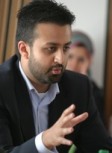
Osama Saeed, Scottish spokesman for the Muslim Association of Britain, believed Scotland could be “a beacon to the world” in Muslim and non-Muslim relations. He said: “I’m sure this meeting would have been taking place anyway, but obviously it has taken on a new light given the events at Glasgow Airport last month. Good community relations do not happen by accident and need to be striven for. We’ll be presenting the work that we’re doing, the executive have their ideas and initiatives, and I’m sure there are many areas where we will work together.”

BBC News, 31 July 2007