Policy Exchange, the right-wing think-tank with close links to Conservative leader David Cameron’s inner circle, is facing legal action for accusing British mosques of distributing extremist literature.
The Independent has learnt that the Al-Manaar Muslim Cultural Heritage Centre in west London has hired the law firm Carter Ruck to sue the think-tank for defamation. An initial complaint will be made “very soon”, a source close to the case said.
Al-Manaar claims that Policy Exchange fabricated several receipts used as evidence of purchase. The North London Central Mosque in Finsbury Park is also understood to be pursuing libel action against the think-tank through the solicitors’ firm Dean and Dean.
Last October the BBC’s Newsnight had been due to run an exclusive report on the findings of an article written for Policy Exchange by Denis MacEoin entitled The Hijacking of British Islam.
Mr MacEoin argued that extremist literature was widely available in British mosques and shops adjoining them, that much of it was funded by the Saudi Arabian government, and that the Finsbury Park mosque was a major perpetrator of such distribution.
But when Richard Watson, the reporter covering the story, and Peter Barron, then editor of Newsnight, examined the report in detail, they found that five receipts used as incriminating evidence looked fake.
The director of the Al-Manaar Centre, Abdulkarim Khalil said last night: “This report is still in circulation and has been very widely read. We are determined to clear our name.” Nobody from Policy Exchange was available for comment.
The news follows the publication earlier this week of another controversial report by the think-tank which recommended migration from some northern cities to the south of England.
David Cameron, on a tour of the North-west at the time, distanced himself from its conclusions, branding the report “insane”.
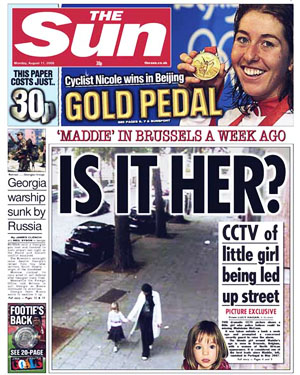 A little girl who cops suspect could be Madeleine McCann asked a woman she was seen walking with, “Can we go back now?” it emerged last night.
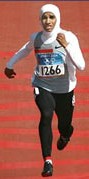 “The Greeks, as we all know, used to compete in the original Olympic games stark naked and smothered in olive oil. That’s no longer the fashion – because we have different cultural ideas about what parts of the body are suitable for public display – and, in fact, some women have taken the trend for Olympic modesty one stage further.
 Newham councillor Alan Craig last night accused Tablighi Jamaat, the controversial Islamic sect behind plans for a giant mosque near the site of the 2012 Olympics, of breaking its promises about keeping local people informed.
 The Scottish Islamic Foundation (SIF) has hit back at criticism about the support the organisation has received from the Scottish Government.
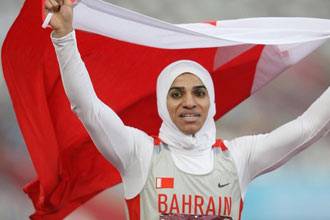 The women in Roqaya Al Ghasara’s home town in Bahrain are so proud of their pioneering Olympic sprinter that some of them got together to design and sew a set of tailor-made aerodynamic veils for her to run in.