
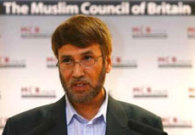
Islam Online interviews Dr Bari

Dr BariThe Blair government is marginalizing the major Muslim organizations in Britain for the sake of unrepresentative bodies and individuals and its domestic and foreign policies risk radicalize more Muslims, which harms the British social harmony and peace, said the Secretary General of the Muslim umbrella group in Britain.

“The government is marginalizing major Muslim organizations, including the MCB, and it seems that new organizations are being brought up in the house of parliament where they don’t have any base,” Muhammad Abdul Bari told IslamOnline.net in an exclusive interview. “It is a perception in the community that they [the government] are trying to divide the community along sectarian lines – that is the perception I have heard in different places.”

He said the government is now reaching out to obscure Islamic organizations and shunning the representative one. “So the government now is talking to something called Sufi Muslim Council founded a month ago,” Abdul Bari said.

The MCB leader, who has a PhD and a PGCE from King’s College London and a management degree from the Open University, said it seems that the government wants to talk to people who “simply listen to them and who do not criticize.”

Islam Online, 11 September 2006

Britain faces ‘the threat of two million home-grown Islamic terrorists’

The Torygraph interviews Dr Bari, secretary-general of the Muslim Council of Britain. The article begins: “Britain could face the threat of two million home-grown Islamic terrorists, says a senior Muslim leader.”

Sunday Telegraph, 10 September 2006

See also Daily Mail, 11 September 2006

Update:  See “Sunday Telegraph’s unfair distortion”, MCB news release, 11 September 2007

‘Multiculturalism’s failure’

“The Communities Minister, Ruth Kelly, has set up a commission to examine ‘integration and cohesion’ in British society. As she launched this, she suggested that the ‘multiculturalism’ model was not entirely successful. You can say that again. With so many alienated young Muslims emerging from British society – the Americans are appalled that so many of those who stand accused of intended terrorism are British citizens – it is evident that there is something seriously amiss with our present version of multiculturalism…. if a nation is to prosper, and not produce sullenly alienated young people, the civil standards of the host culture must also be commonly accepted. Certain values have to bind people together to develop a loyalty to this host culture, including the Queen, the English language, the British traditions of law and civil society, and the religious heritage – which I would call Judeo-Christian….”

Mary Kenny in the Jewish Chronicle, 9 September 2006

Shutting down Muslim charities

Last year, workers at a small Muslim social service agency in Virginia received a disturbing letter from their bank. After six years, Wachovia Corp. was closing the account of the five-person agency that specializes in domestic violence services and other types of immediate assistance to families of all religious backgrounds.

“We were totally shocked,” said Margaret Farchtchi, board treasurer of the Foundation for Appropriate and Immediate Temporary Help, also known as FAITH. “We always kept our accounts in good shape.”

But the agency also had other reasons to think that they would not be targeted. “We felt very secure because we are a local charity,” explained Farchtchi. “We don’t have donors from overseas. We thought we were out of what you might call the danger zone.”

Many people thought the same. As such, the story of FAITH illustrates the challenge now facing the Muslim community. Since 9/11, the government has frozen the assets of six large Muslim organizations and shut them down – although no one has been convicted of any crime.

People, in turn, have begun donating in larger numbers to local charities, assuming these organizations to be free of international ties and safe from government interference. But the experience of FAITH suggests that there are no guarantees.

ColorLines, September-October 2006

Posted in USA

TUC General Council statement jointly with the Muslim Council of Britain

The TUC and the Muslim Council of Britain (MCB) have today (Monday) published a joint statement pledging to work together to encourage more Muslims to join trade unions, encourage better community relations and combat Islamophobia, both within workplaces and in society at large.

Commenting on the statement and on his speech to the 138th TUC Congress in Brighton, Secretary General of the MCB, Dr Muhammad Abdul Bari said:

“The MCB and the TUC have a shared belief in justice, equality and opposition to prejudice. We seek to work in partnership with the TUC and through its networks to enhance an awareness of Islam and counter widespread misunderstandings of how the religion relates to modern society. We will also be using our own networks to raise awareness within the Muslim community of the values of union membership and the very important role which unions have in seeking justice and fair treatment in the workplace and in wider society.”

TUC General Secretary Brendan Barber said:

“The TUC looks forward to working with the MCB to encourage more Muslim employees to become union members. Belonging to a union is the best protection an individual can have against prejudice and exploitation at work. We will also be looking at ways of promoting a greater understanding of Islam and to do all we can to combat the hatred currently being stirred up by extremists who are seeking to drive a wedge between the UK’s many communities.”

TUC press release, 11 September 2006

See also MCB press release, 11 September 2006

East London Muslims fear rise in Islamophobia

Muslims attending Friday prayers at the East London Mosque in Whitechapel in the heart of the UK’s largest Muslim community were abuzz with news of the latest terror arrests. “I hope they’re prosecuted. The police are doing what they should be doing. We want secure places as much as anyone else,” said Tariq, a middle aged, besuited man of Asian origin.

Sayed Tahel Ahmed, a bearded young man who has worked for the borough of Tower Hamlets in victim support, said people were afraid of a rise in Islamophobia. In his experience, it was women who took the brunt of the hostility, which he believed was under-reported. “We keep getting these scary stories, but were not dealing as a society with how to stop it,” said Mr Ahmed.

He said 99.9 per cent of British Muslims would not hesitate to go to the police if they had information about a planned terrorist attack, but that the real terrorists were always the people no-one would suspect.

“There needs to be more research into why people carry out suicide attacks,” said Mr Ahmed, who suspected that would-be terrorists were motivated much more by politics than by religion.

Financial Times, 11 August 2006

Posted in UK

Christians, not Muslims, suffer discrimination – and it’s time to fight back!

Olga Craig complains that it’s Christians, not Muslims, who are being discriminated against in Britain today:

“The cause for such a difference in treatments, many believe, lies with Christianity itself, with its own over-eagerness to encompass multi-faith movements. Damian Thompson, the editor-in-chief of the Catholic Herald, said: ‘The fact that Christians are persecuted and harassed, while Muslim extremists are left alone to spread their propaganda, can be partly attributed to the incredible wimpishness of Anglican and Catholic bishops in Britain, who have spent decades wringing their hands and apologising for the sins of Christianity – and, now that it is under threat, they simply do not know how to speak up for it forcefully,’ he said. ‘Much of the damaging appeasement of extreme Muslims can be traced back to the multi-faith movement embraced so vigorously by the liberal clergy in the Seventies and Eighties. Offending Muslim sensibilities frightens Church leaders far more than acts of terrorism.’…

“Dr Patrick Sookhdeo, of the Institute for the Study of Islam and Christianity, believes that ‘any society must be based on its values. And for the UK they are Judaeo-Christian. The pluralism of the Seventies and Eighties marginalised Christianity. Then secularism came along and effectively neutralised it. So, now we have a moral/spiritual vacuum and anything that is seen to be Christian can be attacked.’…

“One who has fought back is Major Malcolm Hampton, of the Salvation Army. When his band was asked to play carols at the switching on of the Christmas lights in Oakengates, Shropshire, he refused, because the local council had rebranded the event as ‘winter celebrations’ to avoid offending non-Christians. It was, Mr Hampton felt, the final straw. ‘We decided to take a stand’, he said. ‘We are a Christian church and it is a Christian festival which we did not want to see undermined or demeaned. They decided to remove the word Christmas from the event and we thought it was the thin end of the wedge. Enough is enough’.”

Sunday Telegraph, 10 December 2006

The obstacles to ‘defeating Islam’

David Selbourne, author of The Losing Battle with Islam, offers ten reasons why the West will succumb to the advance of Islam. For example:

“The second reason why, as things stand, Islam will not be defeated is that the strengths of the world community of Muslims are being underestimated, and the nature of Islam misunderstood. It is neither a ‘religion of peace’ nor a ‘religion hijacked’ or ‘perverted’ by ‘the few’. Instead, its moral intransigence and revived ardours, its jihadist ethic and the refusal of most diaspora Muslims to ‘share a common set of values’ with non-Muslims are all one, and justified by the Koran itself.”

Times, 9 September 2006

Maligning Muslims

Yusuf Smith replies to an article by Ben MacIntyre in the Times claiming that, despite the occasional talk of a Muslim “fifth column” in Britain, there has been no scare remotely comparable to those surrounding German spies in the early years of World War II and the “Red Scares” of the 1950s:

“As a Muslim who has been paying close attention to the media since Sept 11, I’d beg to differ that society has moved on much since then. The key difference is that Britain is not facing an invasion from a regular or well-equipped army, as Britain did from Germany or the Spanish Republic did from the Nationalists who first coined the term ‘fifth column’. The situation is more of a small, international criminal syndicate capable only of occasional, but devastating, acts of terrorism. Most British people know, whatever the media is telling them, that most Muslims couldn’t possibly support such a thing.

“While ‘official pronouncements on the threat of Islamic extremism have been deliberately nuanced, and carefully measured’, the same cannot be said for the media treatment of the situation, which has been marked by ignorance and by sensationalism across the board. Newspapers have routinely given space for bigoted and inaccurate articles written by people with an agenda, notably Amir Taheri and Patrick Sookhdeo, who have often used the space to lay into ordinary Muslims, not just the extremists…. the fact is that it has become fashionable, and acceptable, to malign an entire religious community in the press.”

Indigo Jo Blogs, 9 September 2006