
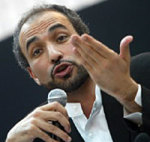
 Tariq Ramadan outlines the latest developments in his appeal against the US government’s 2004 decision to deny him a visa:
“On September 21, 2006, after two years of waiting, an explanation at last arrived. The letter I received from the American embassy, though it refuses my visa application, puts an end to the rumours and baseless allegations that have circulated since my original visa was revoked. After two years of investigation, the State Department cites no evidence of ‘suspicious relationships’, of meetings with terrorists, of encouraging or advocating terrorism, or of so-called ‘doublespeak’. Instead, the State Department cites my having donated about 600 Euros to two humanitarian organizations (in fact a French organisation and its Swiss chapter) serving the Palestinian people.
“I should note that this was not something that the State Department’s investigation revealed. To the contrary, as the State Department acknowledges, it was I myself who brought these donations to the State Department’s attention. The U.S. government apparently believes that the organizations to which I gave small amounts of money have in turn given money to Hamas. But the organizations to which I donated are not deemed suspect in Europe, where I live. I donated to these organizations for the same reason that countless Europeans – and Americans, for that matter – donate to Palestinian causes: not to provide funding for terrorism, but because I wanted to provide humanitarian aid to people who are desperately in need of it.
“After two years of intense investigation, this is the explanation offered for the denial of my visa. I am of course disappointed in the government’s decision. At the same, time, however, I am glad that the State Department has abandoned its allegation that I endorse terrorism. While the State Department has found a new reason to deny my visa application, I think it clear from the history of this case that the U.S. government’s real fear is of my ideas. I am excluded not because the government truly believes me to be a national security threat but because of my criticisms of American foreign policies in the Middle East; because of my opposition to the invasion of Iraq; and because of my criticism of some of the Bush administration’s policies with respect to civil liberties. I am saddened to be excluded from the United States. I am saddened, too, however, that the United States government has become afraid of ideas and that it reacts to its critics not by engaging them but by suppressing, stigmatizing, and excluding them.”
Tariq Ramadan’s website, 25 September 2006
Disgraceful though it is, the US government’s decision does at least demolish Daniel Pipes’ slanders against Professor Ramadan.
For a recent interview with Tariq Ramadan, see Islam Online, 12 September 2006
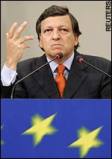 Jose Manuel Durao Barroso, the EU Commission president, has strongly defended Pope Benedict XVI, saying Muslim criticism was unacceptable. “Attacking the pope because he refers in a discourse to a historical document is completely unacceptable,” Barroso said in a newspaper interview on Sunday. “I was disappointed that there were not more European leaders who said: ‘Obviously the pope has the right to express his opinion’. The problem is not the comments of the pope but the reactions of the extremists … We must defend our values.”
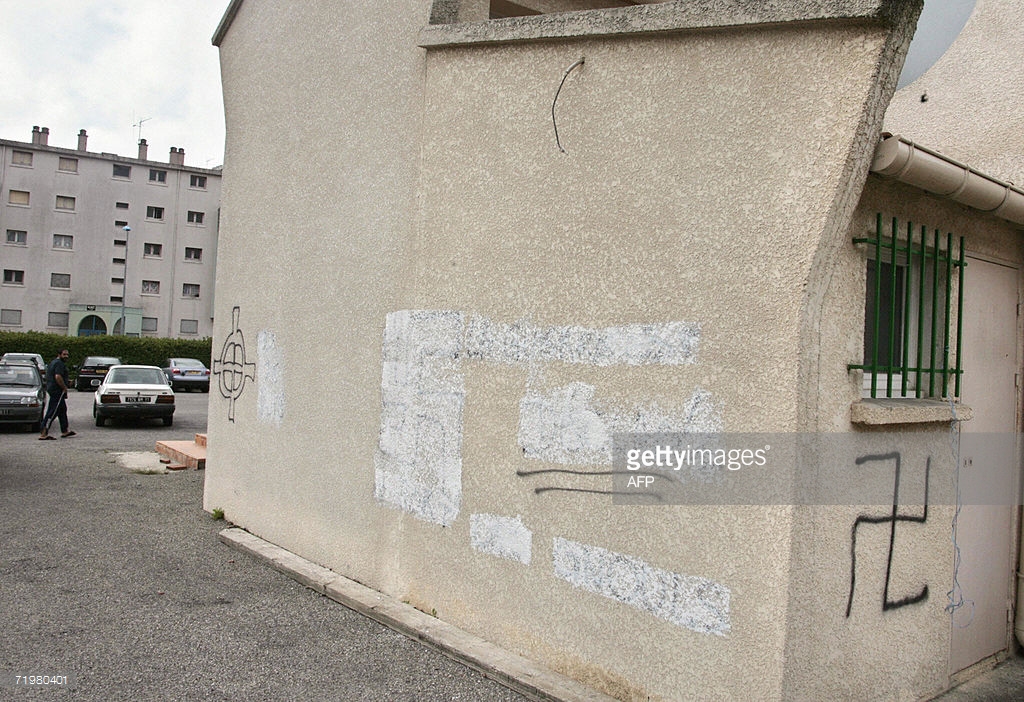 It has been reported that early this morning nearly fifty swastikas and racist slogans such as “France for the French”, “Wogs out” and “Death to Islam” were sprayed on the walls of the mosque at Carcassonne in the south of France.
 Minette Marin is upset by a report that Gloucestershire police have turned down some white would-be recruits, on the (according to her, self-evidently absurd) basis that they want to raise ethnic minority recruitment to 7% of the total by 2009 (last year the figure was 1.6%). She writes:
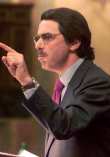 Former prime minister Jose Maria Aznar has criticized Muslim demands for the pope to apologize for his remarks about Islam.