Attorney General backs rethink on race hate laws

New race hate laws are likely to be needed following the acquittal of BNP leader Nick Griffin, the Attorney General signalled today. Lord Goldsmith said the court result exposed a “gap” in the law that left Islam without the same protections as other faiths. British National Party leader Mr Griffin was cleared last week of stirring up racial hatred after describing Islam as a “wicked, vicious faith”.

Asked if he backed a rethink, Lord Goldsmith told BBC Radio’s Today programme: “The prosecution does show that there really is a gap in the law and we need to look to see whether the new law is actually going to fill that gap or not.” Mr Griffin’s defence was to say that he was attacking Muslims and not Asians – and so had not broken race hate laws, Lord Goldsmith pointed out.

Evening Standard, 14 November 2005

Ministers using ‘terrorism’ for cynical ends

Ministers using ‘terrorism’ for cynical ends

by Louise Nousratpour

Morning Star, 13 November 2006

MINISTERS are damaging counter-terrorism policies by using them to seek votes and further their political careers, according to a report released on Sunday.

The Joseph Rowntree Trust report accused Prime Minister Tony Blair and Home Secretary John Reid of playing to a tabloid agenda for short-term electoral gain.

It said that the government’s counter-terrorism campaign “is often driven by party political and electoral motives that are ‘submerging’ its own ‘sensible’ counter-terrorism strategy.”

Chancellor Gordon Brown seemed to confirm the findings when he declared on Sunday that protecting the country from terrorism would be his “first priority” as Prime Minister.

In an interview with the Sunday papers, he also backed calls from Metropolitan Police Commissioner Sir Ian Blair for repressive “anti-terror” powers to be toughened.

The trust’s 70-page study urged the government to abandon talk of a “war on terror” and to review its foreign policy.

Mr Blair’s “close and publicly unquestioning stance” alongside the US was damaging Britain’s influence on global politics, it warned.

The war on terror terminology “is misleading and disproportionate and leaves the Prime Minister open to the charge that he is exploiting the politics of fear,” added the report.

The authors accused ministers of creating a “shadow” criminal justice system in which Muslims were being detained without trial or handed control orders which may breach their human rights.

Stop the War Coalition convener Lindsey German welcomed the report and agreed that ministers were playing to tabloids’ “rotten racist agenda.”

She pointed to numerous other studies showing that Muslims are penalised under anti-terror measures and accused the government of “doing this to cover up its disastrous record.”

The study said that the new terrorism Bill, promised for 2007, must be subjected to full pre-legislative scrutiny in Parliament, possibly by a specially set up committee of MPs and peers.

The findings echoed deputy leadership hopeful Jon Cruddas’s warning at the weekend that the debate over the wearing of veils and the language of the “war on terror” had played into the hands of far-right extremism.

Speaking at a conference organised by anti-fascist group Searchlight on Saturday, he warned that the the BNP is “beginning to establish itself as a rival to Labour in many of our traditional heartlands.”


Vote-seeking ‘hits terror fight’

The Government’s counter-terrorism policy is being damaged by ministers’ vote-seeking and party political interests, a report claimed.

The Joseph Rowntree Reform Trust study said sensible plans to combat terrorism were being “submerged” by the Government’s “electoral motives”. It accused Prime Minister Tony Blair and Home Secretary John Reid of playing to a tabloid agenda and “trying to win over the white working class vote”.

Anti-terror measures which were having a disproportionate effect on Britain’s Muslim community risked alienating people within Islam who could play a vital role in defeating extremism, it added.

The authors urged the Government to abandon talk of a “war on terror” and to review its foreign policy. Mr Blair’s “close and publicly unquestioning stance” alongside the United States was damaging Britain’s influence on global politics, they suggested.

The report said: “The Government’s counter-terrorism campaign is often driven by party political and electoral motives that are ‘submerging’ its own ‘sensible’ counter-terrorism strategy. The actions of ministers, particularly Home Secretary John Reid, could have a ‘boomerang effect’ by alienating the Muslim communities whose trust and co-operation are vital.”

Continue reading

Religious hatred is no more than a variety of racism

Soumaya Ghannoushi2“After his acquittal on the charge of inciting racial hatred, Nick Griffin was asked whether he was a racist. He replied that he was no longer one, that he is now a ‘religionist’. But should we believe that Griffin has really abandoned the racism that frames his ideology and that of the party he leads? Of course not. All Griffin has done is stretch from one category of racism to another – without breaking with the former: from a discourse founded on racial hatred to one based on religio-racial hatred.
“In the speech for which he and his assistant, Mark Collett, were taken to court, the two shifted effortlessly from referring to Islam as ‘this wicked, vicious faith’ that ‘has expanded from a handful of cranky lunatics about 1,300 years ago’, to speaking of Asian ‘muggers’, ‘rapists’, ‘bastards’, ‘cockroaches’ and ‘ethnics’ who need to be ‘shown the door’.

“We are witnessing the emergence of a new type of hatred, where religion and culture overlap with race and ethnicity. The climate generated by the war on terror – stoked further by the inflammatory speech on Friday of the MI5 director general Eliza Manningham-Buller –  has allowed the far-right to redirect its poison of exclusionism from specific racial minorities to specific religio-racial minorities: from the black and Asian, to the Muslim black and Asian.”

Soumaya Ghannoushi in the Guardian, 13 November 2006

Call to bridge West-Muslim divide

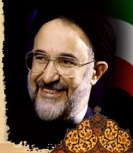
Khatami2A cross-cultural group of 20 prominent world figures has called for urgent efforts to heal the growing divide between Muslim and Western societies. They say the chief causes of the rift are not religion or history, but recent political developments, notably the Israeli-Palestinian conflict. The panel, drawn together by the UN, says a climate of mutual fear and stereotypes is worsening the problem. To combat hostility bred of ignorance, they want education and media projects.

The Alliance of Civilisations, which includes Anglican Archbishop Desmond Tutu and former Iranian President Mohammed Khatami, dismisses the notion that a clash of civilisations is inevitable, but says that swift action is needed. Their findings were presented in a report to the UN Secretary-General Kofi Annan at a ceremony in Istanbul on Monday morning.

BBC News, 13 November 2006

Antwerp: schools forbid Muslim veil

Only two secondary schools in the municipal educational system of Antwerp allow their students to come to school with a Muslim veil. Most refuse entrance to girls who come with a veil. More and more schools elsewhere in Flanders are also adding a ban on the Muslim veil to their regulations.

Various Flemish immigrant organization think that the government should intervene. They point out that banning the Muslim veil reduces the chances of getting a good education. “Immigrant girls can’t choose freely anymore to which school they go and which subjects they will study there. That undermines their chances on the job market,” says Nadia Babazia from the Support Point for Immigrant Girls and Women that researched the wearing of the Muslim veil in Flemish schools.

Islam in Europe, 13 November 2006

Stop the War Coalition holds conference on Islamophobia

Stop the War logoPeople’s Assembly: Islamophobia and the War on Terror

Saturday 18 November 10.00am – 5.30pm
Camden Centre Judd Street London WC1H

How are the attacks on Muslims linked to the wars in Iraq and Afghanistan? How can the anti-war movement counter those attacks in its continuing campaign to end the Bush/Blair wars?

The People’s Assembly will bring together peace and anti-war groups, trade unions, faith groups and organisations, community groups, political parties and any other representative organisations wishing to discuss these important issues. Individuals are also welcome as observers.

More details on Stop the War Coalition website.

Peer doubts race hate law resolve

Lord AhmedThe will of ministers to tighten laws on racial hatred has been questioned by Muslim Labour peer Lord Ahmed.

Several ministers called for a review of the legislation after the BNP’s leader was cleared of stirring up racial hatred in remarks about Islam. But Lord Ahmed said the government had not delivered on previous promises to the Muslim community on race hate laws. It was time for the government to start treating Muslims equally and not like “subjects of a colony”, he said.

Lord Ahmed told the BBC that the government had made unfulfilled promises to the Muslim community earlier this year when a new law on religious and racial hatred was watered down as a result of a Commons defeat. The peer said ministers should have shown more determination to push their measures through.

He said: “What I have seen is that the government has been treating the Muslim community like subjects of a colony rather than equal citizens in the UK.”

BBC News, 12 November 2006