
Faith can bring Jews and Muslims together

InayatA leader of Britain’s biggest Muslim organisation addressed a Jewish audience for the first time in Hampstead on Monday.

The assistant secretary general of the Muslim Council of Britain (MCB), Inayat Bunglawala, was at the Everyman Cinema Club in Holly Bush Vale to take part in a debate about the similarities between Muslims and Jews. The MCB’s decision to take part in the forum Does More Unite Jews and Muslims Than Divides Them, was seen as a step towards bringing the two communities together.

Before the meeting Mr Bunglawala said: “It really is to try and explore how much Jews and Muslims have in common as minority faiths in this country. We want to show some enthusiasm from our part towards more cooperation between Muslims and Jews and we want to stay away from importing any conflicts from abroad.”

The panel also featured leading Jewish historian David Cesarani, chairman of the London Jewish Forum Adrian Cohen and the Independent newspaper journalist Yasmin Alibhai-Brown.

Guardian journalist Jonathan Freedland chaired the debate which was organised by the Jewish Community Centre for London as part of its Opinion Soup series.

Apart from the tensions in Israel and Palestine the most controversial topic was the much criticised decision of the MCB to boycott Holocaust Memorial Day. In response to the criticism Mr Bunglawala said: “The MCB has made a decision about Holocaust Memorial Day, it’s just one of many decisions every year we make. It is always put to the vote but I understand the MCB’s position has caused some distress. There are divisions within the MCB over this and the decision is under review.”
Continue reading

Tatchell and Pim Fortuyn

Over at Aaronovitch Watch, Bruschetta Boy makes some astute points in response to Peter Tatchell’s Democratiya article:

“… he is surely aware that being nasty to minority groups, who in general have a hell of a time, is something that you have to do very carefully indeed if you’re not going to cross the line into ordinary garden-variety racism. I can’t find any reference on the internet to Peter’s views about Pim Fortuyn and would be grateful for any pointers since I’m sure that he’s said something about him. It’s not exactly as if we’re in any danger of the List Peter Tatchell becoming a big force in British anti-immigrant politics, but Fortuyn does represent the far end of where it’s possible to take this line of reasoning, and those people on the Left who don’t feel comfortable in having a go at immigrants for this reason aren’t scared of nothing. A quick glance at the notorious ‘Harry’s Place’ comments boxes shows how careful you have to be about the kind of mates you tend to pick up if you make a career out of saying that we are in danger of being overwhelmed by aliens whose values are inimical to our own.”

New Zealand Muslims slam ‘conference of bigots’

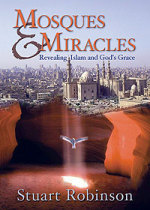
Mosques and MiraclesA conference of Christian church leaders on the “threat” of Islam to New Zealand is being condemned as a “conference of bigots” by senior New Zealand Muslims.
The organiser of the Mosque and Miracles conferences, national director of Middle East Christian Outreach Murray Dillner, said the conference would address the threat posed by Islam to New Zealand society – a threat he likened to the terrorist attacks in the United States of September 11, 2001.

“It’s an underlying threat, but it’s like the twin towers – they imploded. Islam does the same thing to a society – it makes it implode,” he said. “The mindset of Islam is to take over the world. They will do that by any means they can. The church in England ignored Islam. If the church in New Zealand doesn’t rise up, we will be in the same situation.”

Federation of Islamic Associations president Javed Khan said it was a “conference of bigots”. “It’s fearmongering; Islamophobia. The organisers are prejudiced, biased bigots,” he said. “For heaven’s sake, we are less than 1 per cent of the population. Muslims have been in New Zealand for a century. No Muslim has ever done anything like what they are afraid of.”

Continue reading

Veil ban in schools will be divisive, say teachers

Letter in today’s Guardian:

You reported that following new guidance from the education secretary, Alan Johnson, headteachers are to be given the right to ban Muslim girls from wearing the niqab or veil in schools (Report, March 20). Various reasons are put forward as a justification for this, including security.

The claim that the tiny number of girls who wear the niqab are a security risk would be laughable if it did not demonise a vulnerable group of students. It should be remembered that similar claims from Jack Straw last year led to physical attacks on women wearing the veil.

In France where the hijab or headscarf has been banned in some schools, the result has been division and conflict. As teachers we are committed to building inclusive, multicultural and tolerant school communities. At a time of increased Islamophobia, talking about bans on the very few young women who wear the veil can only help to sow discord in our schools.

Kevin Courtney
Executive member, National Union of Teachers
Alex Kenny, Ray Sirotkin, Sara Tomlinson, Gordon White, Sally Kincaid, Nick Grant, Barry Conway, Ken Muller

Muslim leader ‘dismayed’ by new ban on veil-wearing at schools

The Islamic Human Rights Commission (IHRC) slammed new government guidelines spelling out the right of school heads to ban pupils from wearing religious dress such as the Islamic veil as “simply shocking” on Tuesday.

Education Secretary Alan Johnson has drawn up the updated guidance. The change follows defeat for a 12-year-old girl in a legal battle to wear the full-face niqab in class in her Buckinghamshire school last month. A spokesman for the Department for Education and Skills said that the government was not trying to impose a blanket ban on veils at schools.

But IHRC chairman Massoud Shadjareh said that he was “dismayed” at the guidelines. “Successive ministers, dealing with education issues, have failed to give proper guidance when requested by human rights campaigners about schools’ obligations regarding religious dress, including the head scarf, and other service delivery under human rights laws and norms. To now proceed to issue guidance against Muslim communities is simply shocking,” he added.

Muslim Council of Britain education spokesman Tahir Alam played down the significance of the new guidelines. He argued that “the matter still remains with the governing bodies and communities to resolve.”

Morning Star, 21 March 2007

See IHRC press release, 20 March 2007

See also the Guardian, 20 March 2007  and the Independent, 21 March 2007

Why this obsession with the niqab?

Rajnaara Akhtar“Why are we talking about the niqab yet again? Once more this non-issue has hit the headlines.

“It is obvious that in light of the difficulties our schools are facing in tackling bullying, drug abuse, alarming rates of truancy, gang culture, knife and even gun crimes, and teacher abuse; the niqab certainly does not merit the Department for Education’s attention nor subsequent front page headlines in the news.

“A handful of girls wanting to observe the niqab should not be an issue and it should certainly not attract so much media coverage. All that this achieves is to provide further fodder for the ‘it’s those bloomin’ Muslims wanting more special treatment’ camp….

“The impact of the most recent circus surrounding the niqab will empower the Islamaphobes and force Muslims to stop debating the issue of the niqab internally, and unite against a perceived attack on their religious freedom. As a result, the natural progression of the niqab debate among Muslims may have once again been hampered.”

Rajnaara Akhtar of Protect-Hijab at Comment is Free, 21 March 2007

Canadian Federation of Students releases report on needs of Muslim students

The Canadian Federation of Students released a report examining college and university responsiveness to Muslim students today. The Federation’s Task Force on the Needs of Muslim Students compiled the report based on participation of nearly 1,000 Muslim students at 17 on-campus hearings over a seven month period.

“The goal was to develop a better understanding of the needs of Muslim students and to determine how well Ontario universities and colleges are addressing those needs,” said Jesse Greener, Ontario Chairperson of the Canadian Federation of Students. “It’s clear that every day Muslim students face both overt and subtle forms of Islamophobic discrimination on Ontario campuses.”

Islamophobia, as defined in the Ontario Human Rights Commission, is the use of stereotypes, biased or hostile acts towards individual Muslims or followers of Islam in general. The Ontario Human Rights Code sets out standards of religious accommodation for the beliefs and practices of racialised individuals or groups within workplaces and learning environments.

“A general ‘failure to accommodate’ was the most frequently identified problem by Muslim students in many facets of campus life,” said Ausma Malik, Task Force member and student at the University of Toronto. “From a lack of appropriate foods on campus and inadequate prayer space to inflexible academic policies that are often at odds with religious obligations, Ontario’s Muslim students often face a fundamentally different learning environment than other students.”

Continue reading

Lack of contact linked to intolerance

Quebecers have the least personal contact with Jews or Muslims of any Canadians, and less contact means more intolerance, an analysis of poll data suggests.

The findings help explain why “reasonable accommodation” of orthodox Jews and Muslims is so controversial in this province, the Montreal research group that crunched the numbers says.

The Environics poll also reveals that, when it comes to Arabs and Jews, a small minority of Canadians are equal-opportunity bigots – they dislike both.

Montreal Gazette, 21 March 2007

Has the veil been banned?

Inayat Bunglawala of the Muslim Council of Britain argues, that while “there does appear to be a shift in the advice the government is giving to our schools and while a signal is being sent that those schools which, following a consultation with parents and governors, decide to forbid the niqab will be supported, the Sun is wrong to suggest that there will be a blanket ban.”

Inayat continues: “The fact is, however, there are fewer than a dozen schoolgirls who actually wear the niqab out of half a million state school pupils. Still, it will no doubt have helped Mr Johnson – a contender for the post of deputy leader of the Labour party – to look as if he was being just as tough on this issue as his rival, Jack Straw.”

Comment is Free, 20 March 2007