Banning the hijab or other religious symbols which are important to minorities is “likely to result in tension with those communities where no tension existed before”, according to the director of the State’s advisory body on intercultural affairs.
In a detailed intervention in the debate over whether Muslim pupils should be allowed wear the headscarf in State schools, Philip Watt of the National Consultative Committee on Racism and Interculturalism said most schools had already found their own “sensible and sensitive compromise” by allowing it to be worn provided the colour was consistent with the school uniform.
Mr Watt suggested that those advocating a ban on the hijab “may, or may not, have fully considered the consequences of such a ban, for example in respect of all religious symbols and obligations in Irish schools”. While much of the focus had been on the Muslim headscarf, other religious symbols were worn in Irish schools, including the Sikh kara (a bangle), the Sikh patka (a scarf worn by boys and young men), the Jewish kippah or skullcap and Christian crucifixes. The pioneer badge, the sacred heart and crucifixes are worn by some teachers.
“The banning of religious symbols or obligations solely aimed at one religious community or indeed all religious faiths is potentially discriminatory and likely to be tested in Irish law,” Mr Watt said. “In 2004 the French government considered the issuing of a ban on the wearing of the hijab in French schools, but after legal considerations decided that the only way that such a ban would be legal would be to ban virtually all religious symbols and obligations, including large crucifixes.”
Fine Gael education spokesman Brian Hayes and his Labour counterpart Ruairí Quinn said separately last week that they opposed the wearing of the hijab in the country’s secondary schools, though Mr Hayes made a distinction between State-run VEC schools and those run by religious orders, which decide their own rules. “There is enough segregation in Ireland without adding this to it. Segregating in this way is not helpful to Muslims and not helpful to anybody,” Mr Hayes said.
In yesterday’s statement, Mr Watt also sought to correct the impression that all Muslims are recent immigrants. Just under a third of the 32,500 Muslims in the Republic are Irish.
An Irish Times/ TNS mrbi poll conducted last week found that 48 per cent of people feel the wearing of hijabs should be allowed in State schools. Some 39 per cent disagree and 13 per cent have no opinion.
 “The Muslim Council of Britain joins human rights groups, a growing body of thinkers and policymakers dealing with our security, together with a large proportion of the British public who oppose the extension of pre-charge-detention. Any further extension of pre-charge detention risks being counterproductive, damaging community relations and undermining the UK’s moral authority around the world. We oppose terrorism in all its forms. We are all concerned about the right to security, free from terror, but this proposal serves to compound the problem, not resolve it.
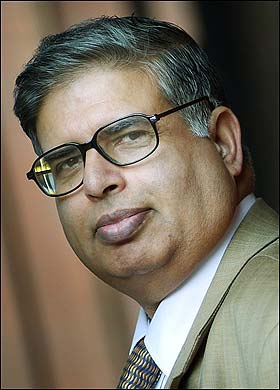 “Britain’s top Muslim [sic] last night praised Gordon Brown and demanded MPs back new laws to hold terror suspects. Khurshid Ahmed, chairman of the British Muslim Forum, the UK’s largest representative Muslim organisation [sic], called for 42 days’ detention without charge. He said it was vital to protect the nation.”
 NEW YORK – After years of being taunted as “bin Laden” and “terrorist” at school, Osama Al-Najjar attempted suicide last July at the age of 15. Now 16, he is an extreme example of the difficulties facing some Arabs in New York, the city hit hardest by the attacks of September 11, 2001.