
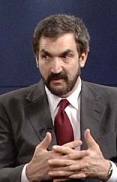
 “The detailed texture of Mr. Bush’s speech transforms the official American understanding of who the enemy is, moving it from the superficial and inadequate notion of ‘terrorism’ to the far deeper concept of ‘Islamic radicalism’. This change has potentially enduring importance if finally … it convinces polite society to name the enemy. Doing so means, for example, that immigration authorities and law enforcement can take Islam into account when deciding whom to let into the country or whom to investigate for terrorism offenses. Focusing on Muslims as the exclusive source of Islamists permits them finally to do their job adequately.”
Daniel Pipes in the New York Sun, 11 October 2005
Marc Lynch reports on Pipes’ performance on al-Jazeera: “Bush’s speech, according to Pipes, indicates that the American government is worried about what is in the Arab media, and that the governments and institutions running those media should expect greater American pressure to behave responsibly. (He does have a point, you know: it’s hard to argue that al-Jazeera doesn’t give a platform to extremists when Pipes keeps getting invited back…)”
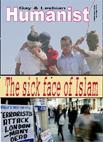 The latest issue of GALHA’s Gay and Lesbian Humanist magazine contains a feature on what they call “The sick face of Islam”.
 Maryam Namazie of the Worker Communist Party of Iran has been awarded the National Secular Society’s Irwin Prize for “Secularist of the Year”. The £5,000 annual prize was presented by Guardian columnist Polly Toynbee at a lunch at the Montcalm Hotel in London. Introducing Namazie, Keith Porteous Wood of the NSS explained that “she has been roundly criticised by Islamists, the Islamic Republic of Iran and even Ken Livingstone after his invitation to this country of Yusuf Al Qaradawi. So she must be doing something right.”
 Stephen Schwartz offers his assessment of a recent OSCE conference in Poland.