Tony Blair’s claim that there is no link between Britain’s foreign policy and terrorist attacks in this country is blown apart by a secret cabinet memo revealed today. A classified paper written by senior Downing Street officials says that everything Britain does overseas for the next decade must have the ultimate aim of reducing “terror activity, especially that in or directed against the UK”.
It admits that, in an ideal world, “the Muslim would not perceive the UK and its foreign policies as hostile” – effectively accepting the argument that Britain’s military action in Iraq and Afghanistan has served as a recruiting sergeant for Islamist terrorist groups. Publicly, Mr Blair has resisted this line fiercely. During his final speech as leader to Labour’s annual conference last month, he described such claims as “enemy propaganda”.
His cabinet allies have supported his position. Earlier this year, John Reid, the Home Secretary, said: “I think it is a dreadful misjudgment if we believe the foreign policy of this country should be shaped in part, or in whole, under the threat of terrorist activity, if we do not have a foreign policy with which the terrorists happen to agree.”
But the memo leaves no doubt that all foreign policy must be driven by the goal of thwarting terrorism in Britain. It demands a “significant reduction in the number and intensity of the regional conflicts that fuel terror activity”.
 Scotland’s biggest council believes that a state-funded Islamic faith school would lead to the “social isolation” of young Scottish Muslims, a secret document has revealed. Despite publicly saying it would consider a school if community leaders could prove the demand, a memo obtained by Scotland on Sunday shows that Glasgow’s education chiefs have voiced “serious concerns” about any such plans.
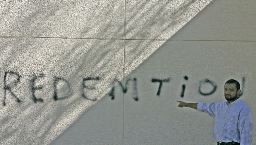 Vandals have struck a Lubbock mosque three times in the past month, prompting fear and calls for understanding among some in the religious center’s community.
 Charles Moore argues that the history of Christian faith schools shows that they represent no threat at all to social cohesion, and that the government was mistaken in proposing a compulsory quota system. He continues:
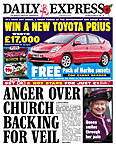 The Archbishop of Canterbury prompted anger yesterday by putting Muslim veils on an equal footing with Christian crosses.
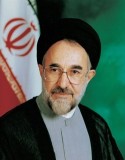 A storm of protest is expected to greet a controversial Iranian former president in Scotland next week amid growing opposition to his visit.
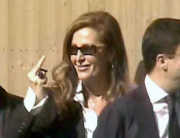 Britain and Australia are not the only countries where debate is raging over the Islamic veil. In Italy, the issue burst into the news this week after the interior ministry ordered round-the-clock police protection for an MP, believing she had been threatened for expressing her views on the subject.
 Reviewing Ian Buruma’s book Murder in Amsterdam Nick Cohen takes exception to Buruma’s willingness to appease the Muslim hordes: